

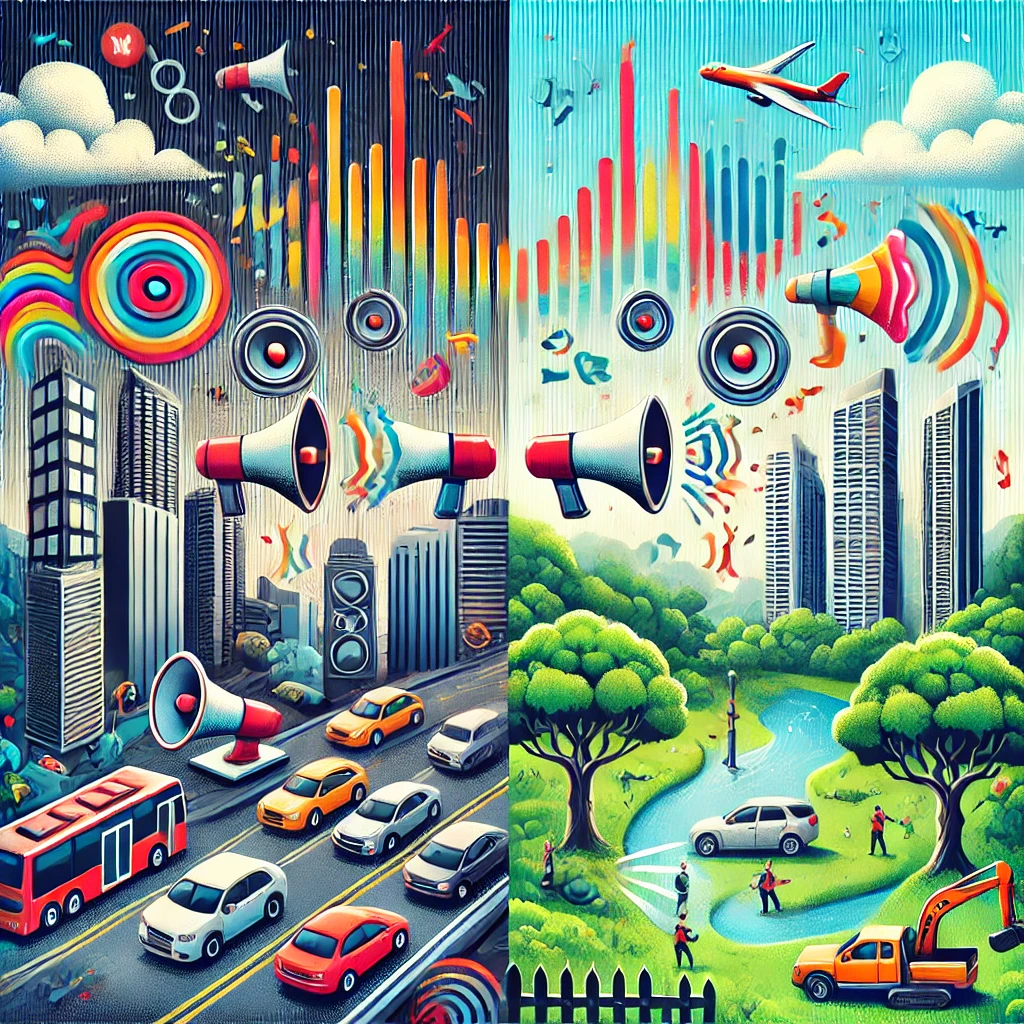

Understanding Noise Pollution: Causes, Effects, and Solutions
Noise pollution, a pervasive yet underappreciated environmental challenge, refers to harmful or disruptive sound levels that interfere with normal human and ecological activities. Unlike other types of pollution, noise pollution does not accumulate in the environment but leaves significant short- and long-term effects on human health, wildlife, and ecosystems. As urbanization and industrialization continue to expand, addressing noise pollution becomes increasingly critical.
Causes of Noise Pollution
Noise pollution stems from a variety of human and natural activities. Key sources include:
1. Transportation Systems
- Road Traffic: Cars, motorcycles, and buses generate substantial noise, especially in densely populated urban centres.
- Air Traffic: Airports and flight paths create high-decibel sounds that can disrupt communities and wildlife over large areas.
- Railways: Train horns, track vibrations, and rail yard operations add to the noise burden in urban and rural settings.
- Maritime Transport: Ships produce underwater noise that can harm marine life.
Fitness That Lasts: Ditch the Fad Diets and Build a Sustainable Workout Routine
2. Industrial and Construction Activities
- Factories: Heavy machinery, assembly lines, and industrial plants produce continuous noise.
- Construction Sites: Activities like drilling, excavation, and concrete mixing create acute, high-intensity noise, especially in developing areas with rapid infrastructure growth.
3. Urban and Social Activities
- Recreational Noise: Concerts, nightclubs, sports events, and fireworks contribute significantly to urban noise levels.
- Daily Urban Sounds: Sirens, street vendors, public transport announcements, and other human activities amplify city noise.
- Household Appliances: Washing machines, vacuum cleaners, and generators produce noise that can affect domestic tranquillity, especially in high-density housing.
4. Agricultural Noise
- Farming equipment such as tractors, harvesters, and water pumps generate noise, often disrupting rural tranquillity.
5. Natural Sources
- While less frequent, events like thunderstorms, volcanic eruptions, and earthquakes can contribute to noise pollution. Human influence exacerbates these effects by amplifying natural soundwaves through urban infrastructure.
Effects of Noise Pollution
The repercussions of noise pollution are extensive, influencing health, well-being, productivity, and environmental sustainability.
Human Health Impacts
- Hearing Damage: Exposure to sound levels above 85 decibels can cause irreversible hearing loss or tinnitus.
- Mental Health Issues: Persistent noise can induce psychological problems such as anxiety, depression, and chronic stress.
- Cognitive Impairment: In children, exposure to high noise levels has been linked to learning difficulties and impaired memory.
- Physical Health Problems: Elevated noise exposure is associated with headaches, high blood pressure, and an increased risk of stroke and heart attacks.
Environmental and Wildlife Impacts
- Ecosystem Disruption: Noise pollution disrupts animal communication, affecting their ability to hunt, mate, and avoid predators.
- Marine Life Threats: The loud underwater sounds generated by ships, sonar, and offshore drilling can disorient, injure, or even kill marine creatures, particularly cetaceans like whales and dolphins.
- Migration Patterns: Birds and other wildlife may alter their migration routes to avoid noisy areas, which can lead to ecological imbalances.
Economic and Social Costs
- Lower Productivity: Noise-related distractions and stress reduce workplace efficiency.
- Healthcare Expenditure: Noise-induced health problems lead to increased healthcare costs.
- Real Estate Devaluation: Properties in noisy areas are often less desirable, resulting in lower market values.
“Unlocking the Secrets of Global Warming: Understanding, Impacts, and Solutions”
Effective Strategies for Creating a Noise-Pollution-Free Environment
Noise pollution, often overlooked, is a growing environmental concern that significantly affects human health and wildlife. Prolonged exposure to high noise levels can lead to stress, hearing impairment, sleep disturbances, and even cardiovascular issues. Creating a noise-pollution-free environment requires concerted efforts from individuals, communities, and governments. Below are effective strategies to mitigate noise pollution and foster quieter, healthier surroundings.
1. Urban Planning and Zoning Regulations
Proper urban planning is crucial for managing noise pollution in cities. Zoning regulations can separate residential areas from industrial zones, airports, and highways, reducing noise exposure for communities. Establishing noise buffer zones with green belts, walls, and acoustic barriers minimizes sound transmission.
2. Noise-Reducing Infrastructure
Constructing noise-reducing infrastructure is a proactive way to tackle the issue. For instance:
- Soundproofing buildings: Using double-glazed windows, sound-absorbing materials, and thicker walls during construction.
- Noise Barriers Along Highways: These barriers significantly reduce traffic noise for nearby residents.
- Quieter Roads: Using low-noise asphalt can reduce tire and road interaction noise.
3. Enforcing Noise Regulations
Governments must enforce strict noise pollution regulations. Setting decibel limits for residential, commercial, and industrial areas ensures compliance. Regular monitoring of noise levels and imposing fines on offenders discourage unnecessary noise production.
4. Promoting Quieter Technology
Innovation in technology can lead to quieter machinery and vehicles. Encouraging the use of electric vehicles, which produce significantly less noise than traditional internal combustion engine vehicles, is one example. Similarly, industries can adopt quieter equipment to minimize noise pollution at the source.
5. Green Spaces and Natural Barriers
Trees and vegetation are natural noise absorbers. Planting trees along roadsides, in urban parks, and around residential complexes reduces noise and adds aesthetic value. Rooftop gardens and vertical greenery on buildings also contribute to noise reduction in densely populated areas.
6. Public Awareness Campaigns
Educating people about the impacts of noise pollution is essential. Awareness campaigns can highlight practical steps individuals can take, such as reducing the volume of music and TV, avoiding honking unnecessarily, and adhering to quiet hours in residential areas. Schools and community groups can play a pivotal role in promoting these habits.
7. Workplace Noise Control
In workplaces, especially in industries prone to high noise levels, employers must adopt measures like:
- Providing personal protective equipment (PPE) such as earplugs.
- Installing noise dampening systems.
- Redesigning workflows to isolate loud machinery.
8. Encouraging Public Transportation
Reducing the reliance on personal vehicles through efficient public transportation systems can significantly decrease traffic noise. Incentivizing public transit and carpooling also alleviates congestion, a major contributor to urban noise.
9. Noise-Free Zones
Designating areas as “noise-free zones” near hospitals, schools, and wildlife sanctuaries ensures these sensitive locations remain quiet. Strictly enforcing rules in these zones is vital for their effectiveness.
10. Leveraging Smart Technology
Smart noise sensors can monitor and report noise pollution levels in real-time. These devices allow authorities to identify and address noise hotspots promptly. In addition, integrating smart home technology enables individuals to create quieter living environments.