

Close Menu
    Facebook X (Twitter) Instagram
    Facebook X (Twitter) Instagram Vimeo
    Fitnessproguru
    Subscribe Login
    • Health Issues
    • Healthy Diet
    • Features
      • Article Layouts
        • Article Layout 1
        • Article Layout 2
        • Article Layout 3
        • Article Layout 4
        • Article Layout 5
        • Article Layout 6
        • Article Layout 7
        • Article Layout 8
        • Article Layout 9
        • Article Layout 10
        • Article Layout 11
        • Article Layout 12
        • Article Layout 13
        • Article Layout 14
      • Article Sidebar
        • Article Left Sidebar
        • Article Right Sidebar
        • Article Fullwidth
      • Post Format
        • Post Format Standard
        • Post Format Gallery
        • Post Format Video
        • Post Format Audio
        • Post Format Quote
      • pages
        • Author Page
        • Category Page
        • Tag page
        • Search page
        • 404 page
      • Archive Layouts
      • Autoload Next Post
      • Post Gallery
      • Post Video Background
      • Post Review
      • Sponsored Post
    • Meditation
    • Workout
    • Yoga
    • Features
      • Article Layouts
        • Article Layout 1
        • Article Layout 2
        • Article Layout 3
        • Article Layout 4
        • Article Layout 5
        • Article Layout 6
        • Article Layout 7
        • Article Layout 8
        • Article Layout 9
        • Article Layout 10
        • Article Layout 11
        • Article Layout 12
        • Article Layout 13
        • Article Layout 14
      • Article Sidebar
        • Article Left Sidebar
        • Article Right Sidebar
        • Article Fullwidth
      • Post Format
        • Post Format Standard
        • Post Format Gallery
        • Post Format Video
        • Post Format Audio
        • Post Format Quote
      • pages
        • Author Page
        • Category Page
        • Tag page
        • Search page
        • 404 page
      • Archive Layouts
      • Autoload Next Post
      • Post Gallery
      • Post Video Background
      • Post Review
      • Sponsored Post
    • Features
      • Article Layouts
        • Article Layout 1
        • Article Layout 2
        • Article Layout 3
        • Article Layout 4
        • Article Layout 5
        • Article Layout 6
        • Article Layout 7
        • Article Layout 8
        • Article Layout 9
        • Article Layout 10
        • Article Layout 11
        • Article Layout 12
        • Article Layout 13
        • Article Layout 14
      • Article Sidebar
        • Article Left Sidebar
        • Article Right Sidebar
        • Article Fullwidth
      • Post Format
        • Post Format Standard
        • Post Format Gallery
        • Post Format Video
        • Post Format Audio
        • Post Format Quote
      • pages
        • Author Page
        • Category Page
        • Tag page
        • Search page
        • 404 page
      • Archive Layouts
      • Autoload Next Post
      • Post Gallery
      • Post Video Background
      • Post Review
      • Sponsored Post
    • Features
      • Article Layouts
        • Article Layout 1
        • Article Layout 2
        • Article Layout 3
        • Article Layout 4
        • Article Layout 5
        • Article Layout 6
        • Article Layout 7
        • Article Layout 8
        • Article Layout 9
        • Article Layout 10
        • Article Layout 11
        • Article Layout 12
        • Article Layout 13
        • Article Layout 14
      • Article Sidebar
        • Article Left Sidebar
        • Article Right Sidebar
        • Article Fullwidth
      • Post Format
        • Post Format Standard
        • Post Format Gallery
        • Post Format Video
        • Post Format Audio
        • Post Format Quote
      • pages
        • Author Page
        • Category Page
        • Tag page
        • Search page
        • 404 page
      • Archive Layouts
      • Autoload Next Post
      • Post Gallery
      • Post Video Background
      • Post Review
      • Sponsored Post
    • Features
      • Article Layouts
        • Article Layout 1
        • Article Layout 2
        • Article Layout 3
        • Article Layout 4
        • Article Layout 5
        • Article Layout 6
        • Article Layout 7
        • Article Layout 8
        • Article Layout 9
        • Article Layout 10
        • Article Layout 11
        • Article Layout 12
        • Article Layout 13
        • Article Layout 14
      • Article Sidebar
        • Article Left Sidebar
        • Article Right Sidebar
        • Article Fullwidth
      • Post Format
        • Post Format Standard
        • Post Format Gallery
        • Post Format Video
        • Post Format Audio
        • Post Format Quote
      • pages
        • Author Page
        • Category Page
        • Tag page
        • Search page
        • 404 page
      • Archive Layouts
      • Autoload Next Post
      • Post Gallery
      • Post Video Background
      • Post Review
      • Sponsored Post
    • Features
      • Article Layouts
        • Article Layout 1
        • Article Layout 2
        • Article Layout 3
        • Article Layout 4
        • Article Layout 5
        • Article Layout 6
        • Article Layout 7
        • Article Layout 8
        • Article Layout 9
        • Article Layout 10
        • Article Layout 11
        • Article Layout 12
        • Article Layout 13
        • Article Layout 14
      • Article Sidebar
        • Article Left Sidebar
        • Article Right Sidebar
        • Article Fullwidth
      • Post Format
        • Post Format Standard
        • Post Format Gallery
        • Post Format Video
        • Post Format Audio
        • Post Format Quote
      • pages
        • Author Page
        • Category Page
        • Tag page
        • Search page
        • 404 page
      • Archive Layouts
      • Autoload Next Post
      • Post Gallery
      • Post Video Background
      • Post Review
      • Sponsored Post
    • Post
      • Standard Post
      • Gallery Post
      • Video Post
      • Quote Post
      • Audio Post
      • No Sidebar
    • Pages
      • Author Page
      • Search Page
      • 404 Page
    • Categories
    • Business
      • Inspiration
      • Health
      • Tech
    • Business
      • Inspiration
      • Health
      • Tech
    • Business
      • Inspiration
      • Health
      • Tech
    • Business
      • Inspiration
      • Health
      • Tech
    • Active
    • Business
      • Inspiration
      • Health
      • Tech
    • Business
      • Inspiration
      • Health
      • Tech
    • Social
    • Buy Theme
    • Active
    • Active
    • Active
    • Active
    • Active
    • Sports
    • Sports
    • Sports
    • Sports
    • Sports
    • Shop
      • Shop Layouts
      • Shop Page
    • Shop
      • Shop Layouts
      • Shop Page
    • Shop
      • Shop Layouts
      • Shop Page
    • Shop
      • Shop Layouts
      • Shop Page
    • Shop
      • Shop Layouts
      • Shop Page
    • Branding
    • Business
    • Finance
    • Marketing
    • Technology
    Fitnessproguru
    • Categories
    • Default Kit
    Home»Health Issues»Is Too Much Sleep Dangerous? Here’s What You Need to Know
    Health Issues

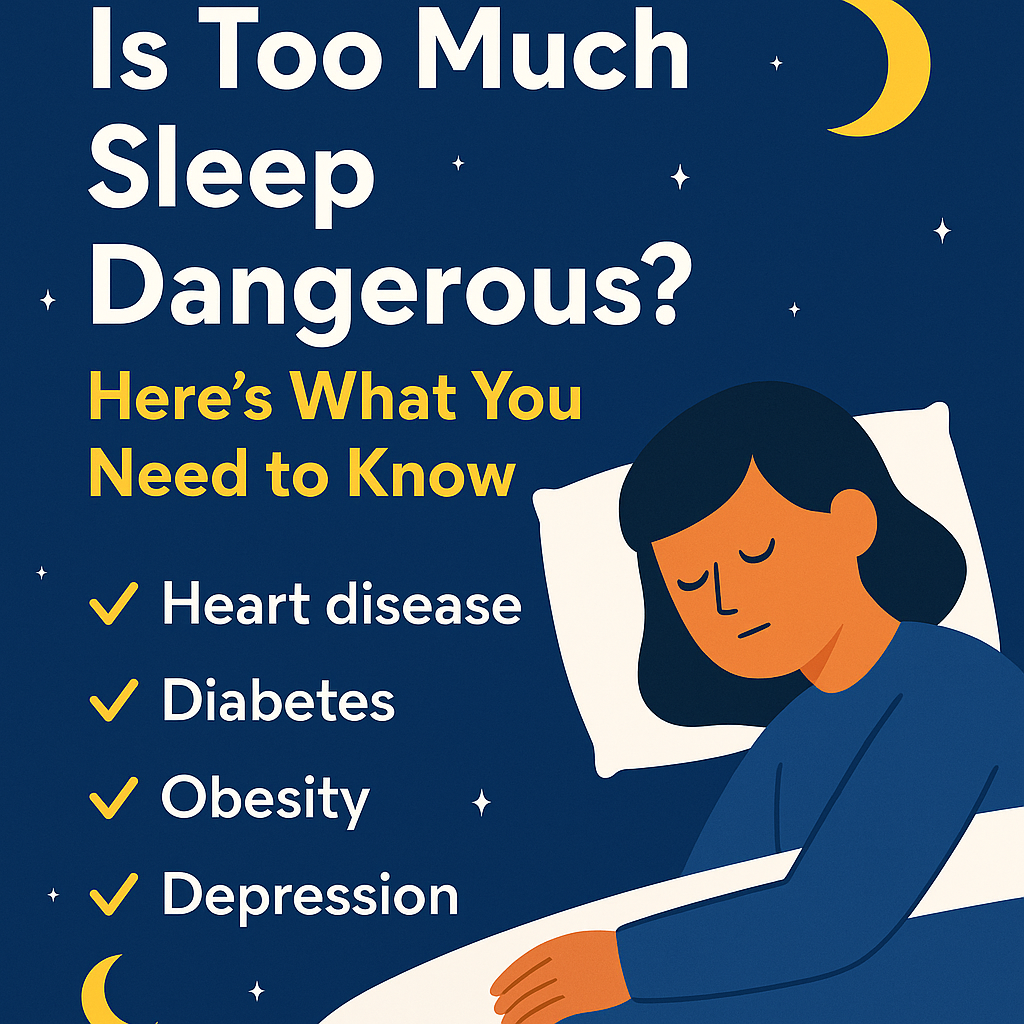
    Is Too Much Sleep Dangerous? Here’s What You Need to Know

    Fitness GuruBy Fitness GuruJuly 18, 2019Updated:June 17, 2025No Comments6 Mins Read
    Facebook Twitter Pinterest LinkedIn Tumblr WhatsApp VKontakte Email
    Is Too Much Sleep Dangerous? Here’s What You Need to Know
    Share
    Facebook Twitter LinkedIn Pinterest Email

    Introduction

    Is Too Much Sleep Dangerous? Here’s What You Need to Know

    Sleep is universally recognized as one of the most crucial aspects of human health, necessary for physical recovery, mental clarity, and emotional balance. However, what often escapes public awareness is that too much sleep—just like too little—can be harmful. The popular mantra “more is better” doesn’t always apply when it comes to sleep. In fact, oversleeping has been linked to various health issues, including heart problems, diabetes, depression, cognitive decline, and even early mortality.

    This article explores in detail how excessive sleep can be dangerous, why it occurs, and what you can do to maintain healthy sleep habits.


    Section 1: What Is Oversleeping?

    1.1 Definition

    Oversleeping, or hypersomnia, refers to excessive sleep duration that significantly exceeds the recommended 7–9 hours per night for most adults. While occasional longer sleep durations may not be harmful—especially after periods of sleep deprivation—consistent oversleeping can have negative effects.

    1.2 Recommended Sleep Durations (According to Age)

    Age Group Recommended Sleep Duration
    Newborns (0–3 mo) 14–17 hours
    Infants (4–11 mo) 12–15 hours
    Toddlers (1–2 yrs) 11–14 hours
    Preschool (3–5 yrs) 10–13 hours
    School Age (6–13) 9–11 hours
    Teenagers (14–17) 8–10 hours
    Adults (18–64) 7–9 hours
    Older Adults (65+) 7–8 hours

    Sleeping more than 9 hours regularly as an adult may be considered oversleeping.


    Section 2: Causes of Oversleeping

    2.1 Lifestyle and Behavioral Factors

    • Lack of physical activity: Sedentary lifestyles often disrupt the natural circadian rhythm, making the body crave more rest.

    • Poor diet: High sugar and carb intake can lead to sluggishness and increased fatigue.

    • Stress and mental health: Anxiety and depression can alter sleep cycles, sometimes resulting in oversleeping.

    • Alcohol and drug use: Substances can disrupt REM cycles and cause increased sleep duration.

    2.2 Medical Conditions

    • Sleep Apnea: Causes disrupted breathing, leading to poor-quality sleep and excessive daytime sleepiness.

    • Narcolepsy: A neurological disorder that can cause overwhelming daytime drowsiness.

    • Hypothyroidism: A slower metabolism often leads to fatigue and a need for more sleep.

    • Chronic Fatigue Syndrome (CFS): Characterized by persistent tiredness not improved by rest.

    • Restless Leg Syndrome (RLS): Disrupts sleep, often causing people to stay in bed longer.

    • Depression: A common symptom is hypersomnia, especially in atypical depression.

      Thyroid-Stimulating Hormone (TSH): Functions, Disorders, Testing, and Treatment


    Section 3: Health Risks Associated with Too Much Sleep

    3.1 Cardiovascular Disease

    Studies have shown a link between long sleep durations and increased risk of heart disease. Oversleeping is associated with:

    • Higher incidence of heart attacks

    • Irregular heart rhythms

    • Increased arterial inflammation

    A 2018 study published in the Journal of the American Heart Association found that individuals who slept more than 9 hours a night had a 33% higher risk of developing heart disease.

    3.2 Diabetes

    Excessive sleep is associated with impaired glucose tolerance and insulin resistance. Those who sleep more than 9 hours regularly are:

    • More prone to Type 2 diabetes

    • Likely to develop metabolic syndrome

    3.3 Obesity

    Oversleeping contributes to weight gain through:

    • Reduced physical activity

    • Hormonal imbalances (such as leptin and ghrelin)

    • Increased appetite and cravings

    3.4 Mental Health Disorders

    • Depression and anxiety can be both a cause and effect of oversleeping.

    • It disrupts circadian rhythms, which worsens mood disorders.

    • Oversleeping also contributes to low self-esteem, lack of motivation, and social withdrawal.

    3.5 Cognitive Decline and Dementia

    • Long sleep duration has been associated with memory problems, slower brain function, and Alzheimer’s disease.

    • A Harvard study found that women who slept more than 9 hours had worse cognitive performance than those sleeping 7–8 hours.

    3.6 Headaches

    • Oversleeping can cause tension headaches due to effects on neurotransmitters like serotonin.

    • Irregular sleep schedules can disturb the body’s natural rhythm, triggering migraines.

    3.7 Mortality Risk

    Multiple studies have confirmed that individuals who sleep excessively have a higher risk of death, regardless of age, gender, or activity level.


    Section 4: Psychological Effects of Oversleeping

    4.1 Mood Disturbances

    Oversleeping can leave people feeling:

    • Groggy or foggy-minded

    • Emotionally drained

    • More irritable or anxious

    4.2 Social Isolation

    Oversleeping reduces the time available for:

    • Social interaction

    • Daily responsibilities

    • Self-care and hobbies

    This withdrawal can feed into a cycle of loneliness and depression.

    4.3 Productivity Loss

    People who oversleep tend to:

    • Miss work or school more often

    • Exhibit reduced cognitive performance

    • Struggle with focus, memory, and creativity


    Section 5: Biological Mechanisms Behind Oversleeping and Its Impact

    5.1 Circadian Rhythm Disruption

    • The body runs on a 24-hour clock influenced by light and dark.

    • Oversleeping confuses this rhythm, disrupting:

      • Hormonal release (melatonin, cortisol)

      • Sleep-wake cycles

      • Digestion and metabolism

    5.2 Neurotransmitter Imbalance

    Oversleeping affects brain chemicals:

    • Serotonin and dopamine levels become erratic.

    • This imbalance can lead to mood swings, low energy, and anxiety.

    5.3 Inflammatory Markers

    Chronic oversleeping raises:

    • C-reactive protein (CRP)

    • Interleukin-6 (IL-6)
      These contribute to systemic inflammation, heart disease, and cognitive decline.


    Section 6: The Vicious Cycle: Oversleeping and Fatigue

    Contrary to what you might expect, sleeping more can make you feel more tired. This is due to:

    • Disrupted sleep architecture (more light sleep, less deep sleep)

    • Misalignment of sleep phases

    • Reduced daily exposure to sunlight, affecting melatonin regulation

    The Ultimate History of Football: From Ancient Origins to Global Phenomenon


    Section 7: How to Know if You’re Oversleeping

    7.1 Signs You Might Be Sleeping Too Much

    • Consistently needing more than 9 hours of sleep

    • Waking up tired even after long sleep

    • Trouble falling asleep at night

    • Daytime fatigue despite long night sleep

    • Frequent headaches or back pain

    7.2 Self-Monitoring Tools

    • Sleep diaries

    • Wearable devices (e.g., Fitbit, Apple Watch)

    • Sleep-tracking apps like Sleep Cycle or Pillow


    Section 8: How to Fix Oversleeping

    8.1 Create a Sleep Schedule

    • Sleep and wake up at the same time daily

    • Avoid naps longer than 20–30 minutes

    8.2 Get More Morning Light

    • Expose yourself to natural sunlight early in the day

    • It helps reset your biological clock

    8.3 Improve Sleep Quality, Not Quantity

    • Make your bedroom cool, dark, and quiet

    • Avoid caffeine and screens before bed

    • Practice relaxation techniques like deep breathing or meditation

    8.4 Increase Physical Activity

    • Daily exercise boosts energy levels and reduces the urge to oversleep

    8.5 Seek Medical Help

    If you suspect an underlying condition like:

    • Depression

    • Sleep apnea

    • Hypothyroidism
      Consult a sleep specialist or physician.


    Section 9: When Is More Sleep Okay?

    • After sleep deprivation (recovery sleep)

    • During illness or infection

    • During pregnancy

    • Adolescence and growth spurts

    Occasional longer sleep is not dangerous. The key concern is chronic oversleeping.


    Conclusion

    While society often focuses on the dangers of sleep deprivation, oversleeping deserves equal attention. The health risks associated with prolonged sleep—including heart disease, obesity, cognitive decline, and increased mortality—underscore the importance of balanced sleep habits.

    Sleep is not just about duration but also quality and consistency. To protect your physical and mental well-being, prioritize good sleep hygiene, monitor your habits, and seek help when needed. The sweet spot for sleep is not “as much as possible” but just the right amount your body needs to function optimally.

    Share. Facebook Twitter Pinterest LinkedIn Tumblr WhatsApp Email
    Previous Article“Empowering Your Core: Mastering Dandasana for Inner Strength and Emotional Resilience”
    Next Article Only 10 min playing with pets can decrease your stress
    Fitness Guru

    Related Posts

    Thyroid-Stimulating Hormone (TSH): Functions, Disorders, Testing, and Treatment

    February 21, 2025

    “E-Cigarettes: A Safer Alternative or Hidden Risk?”

    January 15, 2025

    “Sleep and Smartphones: How Screen Time Impacts Your Rest and Well-Being”

    January 12, 2025

    “R.O Water: Hidden Dangers and Harmful Effects on Your Health”

    January 9, 2025

    Comments are closed.

    Search
    Gallery
    demo_image-26
    post-column-01-13
    demo_image-6
    demo_image-38
    post-column-01-11
    post-column-01-6
    All Tags
    Baseball Best Business Cars Clothing commerce company Congress Earnings Entertainment Fashion Featured Finance Fitness health health care inspiration Interviews Market marketing meditation mental health MLB Morning Movies Music Office Philadelphia Phillies Politics Relaxing sleep Special Sports Style Tech technology Tip Travel TV Utilities Video Watchlists water workout yoga
    banner-02
    Facebook X (Twitter) Instagram Pinterest
    • Buy Theme
    • Entertainment
    • Fashion
    • Sports
    • Business
    • The new Moto G Stylus and G Power are surprisingly adept cameraphones
    © 2026 Fitnesspro Guru. Designed by ThemeSphere.

    Type above and press Enter to search. Press Esc to cancel.

    Sign In or Register

    Welcome Back!

    Login to your account below.

    or
    Login with Bluehost
    Lost password?